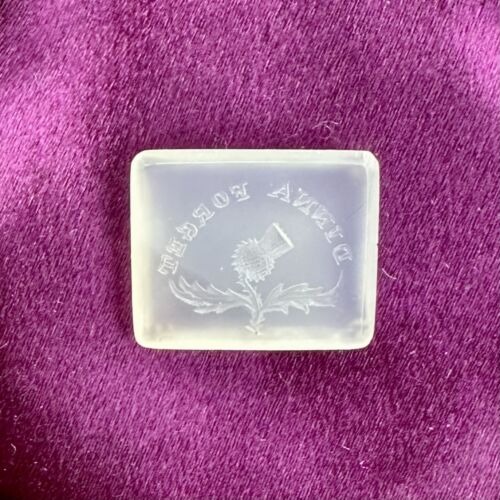
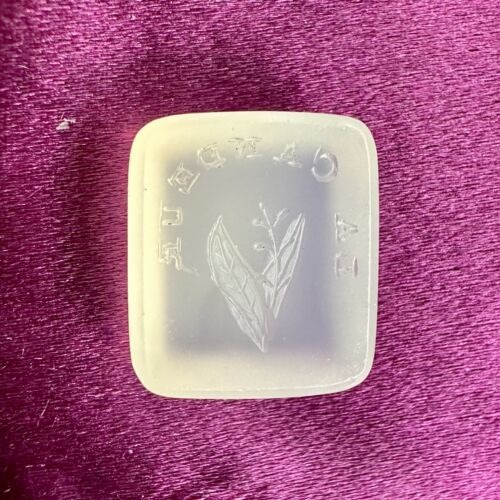
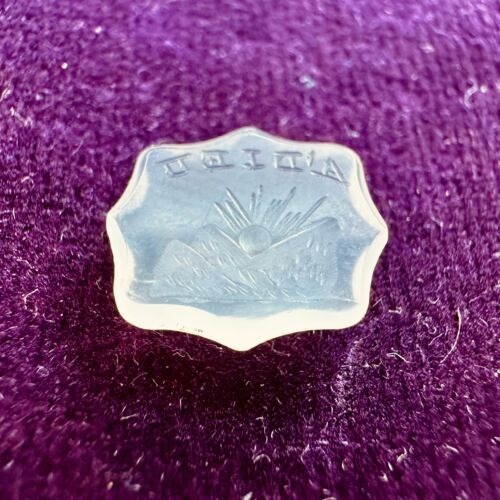
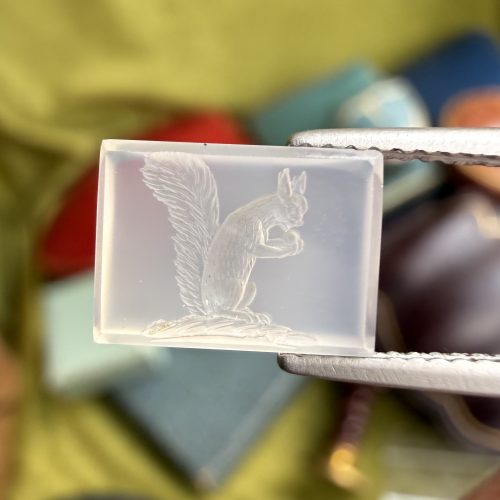
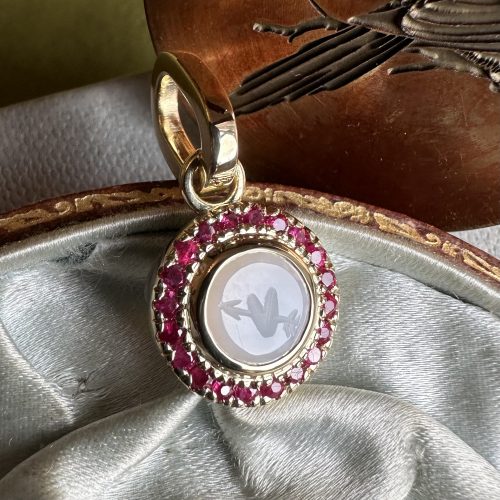
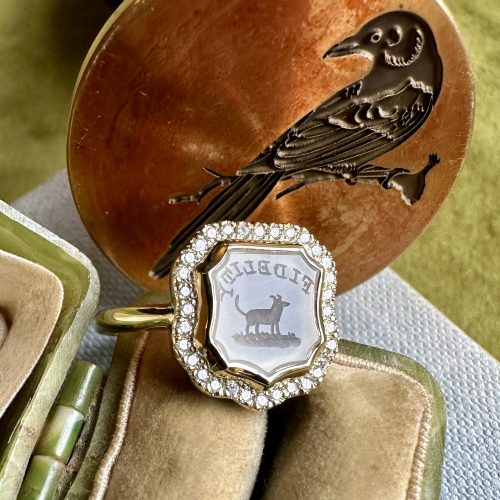
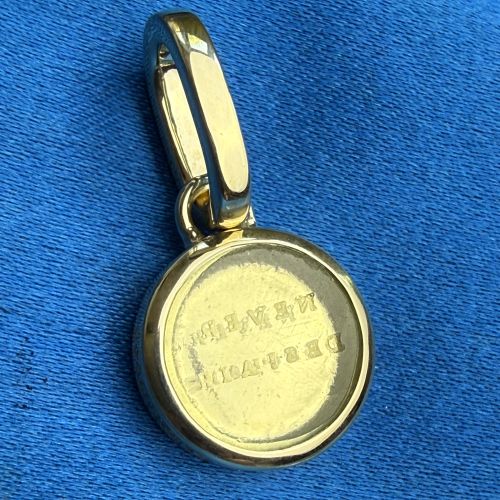
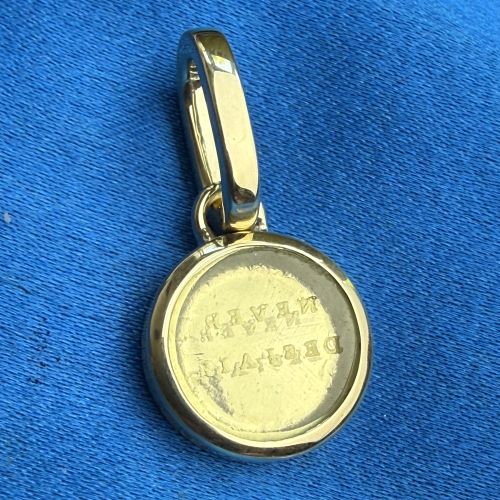
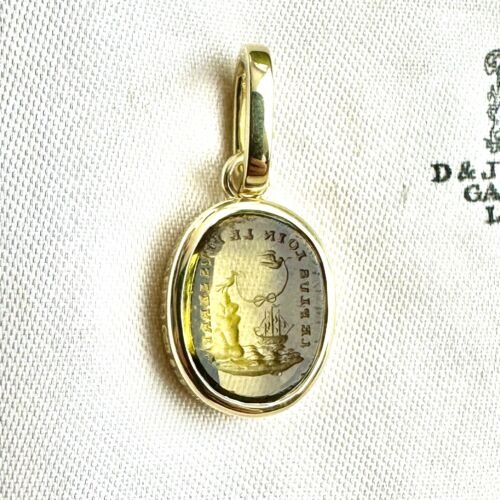
First thing’s first: Chalcedony pronunciation. It’s chal-SE-dony, not CHAL-se-dony. Great, so now as you read all about chalcedony jewelry and intaglios, your inner monologue can be correct.
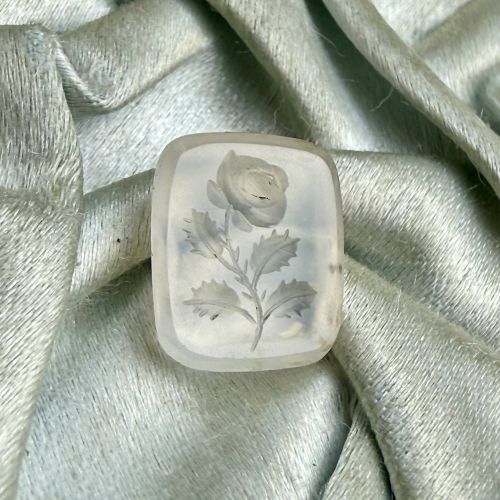
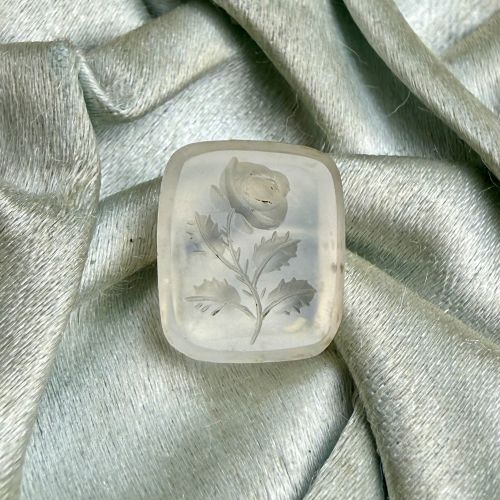
Now, the more important stuff: How it looks! Usually, chalcedony is white, but it can vary from semi opaque to a true deep white, and there are more creamy variants as well. Like bloodstone, it’s classic, lending itself to the more discreet type of personal talisman, the perfect option for people who want their jewelry as a reminder for themselves, rather than screaming for attention (like the deep orange of carnelian, for example).
Lots of the chalcedony jewelry we have designed for our clients have been as these types of personal keepsakes, whether they’re as symbols of courage for the challenges ahead, or in memory of loved ones past.
A few times every year, we see chalcedony intaglios in different colours. For example, there are rare pieces of blue chalcedony, which is one of the modern alternatives for a March birthstone, breathing air and water vibes into the pieces.
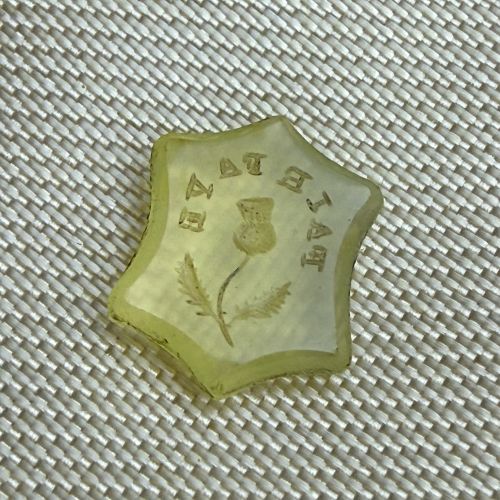
We also get in some intaglios that allow us to make green chalcedony jewelry. The type of green that chalcedony forms is a lighter, more subtle type of chartreuse colour as opposed to a bold green like emerald. Despite the lighter colour, green chalcedony jewelry are real statement makers and are highly sought after – rightly so, because they’re quite exciting.
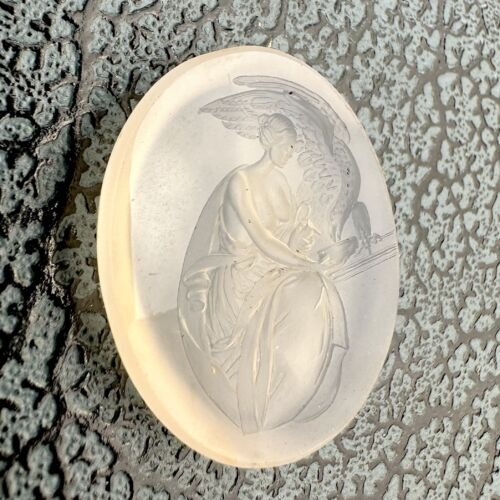
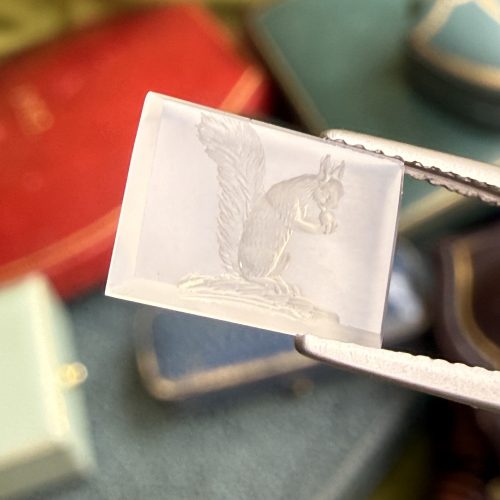
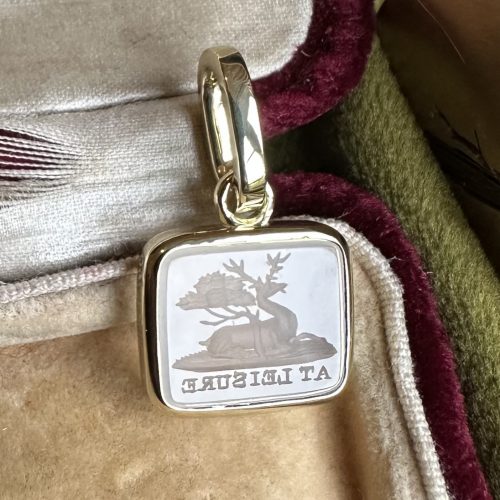
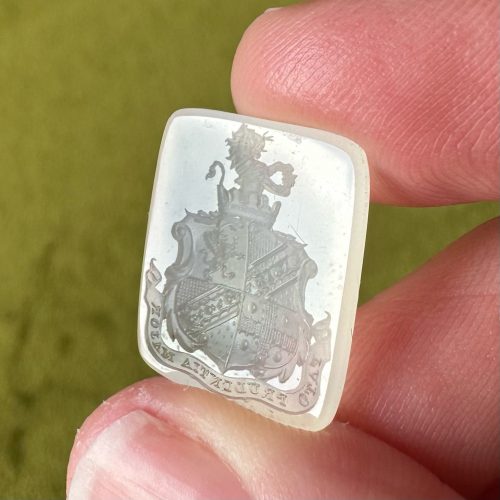
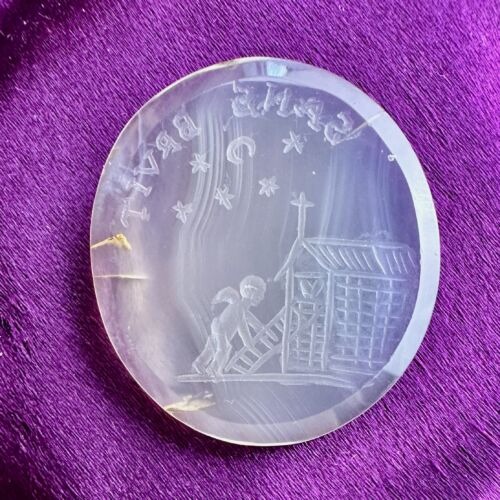
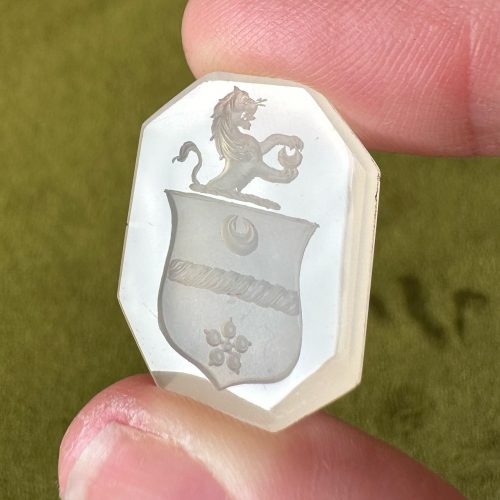
While the green chalcedony intaglios are often featuring florals, the classic white chalcedony are a wide range of different designs. Much like bloodstone and carnelian, the hard stone of chalcedony is easier to carve than something like rock crystal or amethyst, so they can be incredibly detailed.
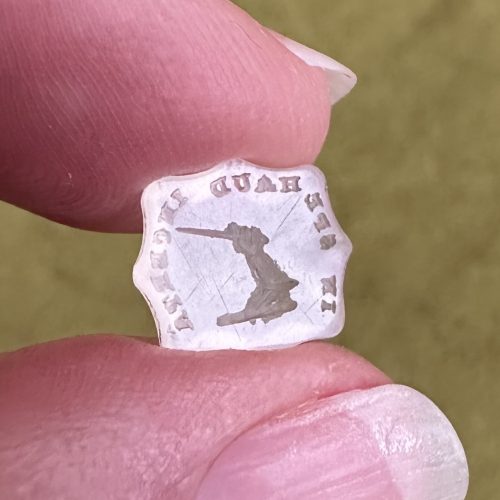
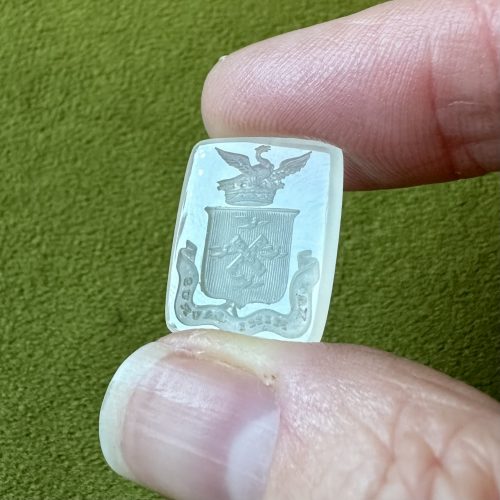
This ability to make incredibly detailed chalcedony intaglios lent the stone to being used for heraldics, so there are a lot of Georgian-period pieces that have full armorials, perfect for those seldom-sent correspondences delivered by horseback postman. These wax seals allowed for privacy from peeking eyes, while simultaneously offering confidence to the recipient of the letter on the identity of the sender. Chalcedony was a popular choice thanks to the neutral colour palette, lending itself to any family crest without adding any hidden meanings.
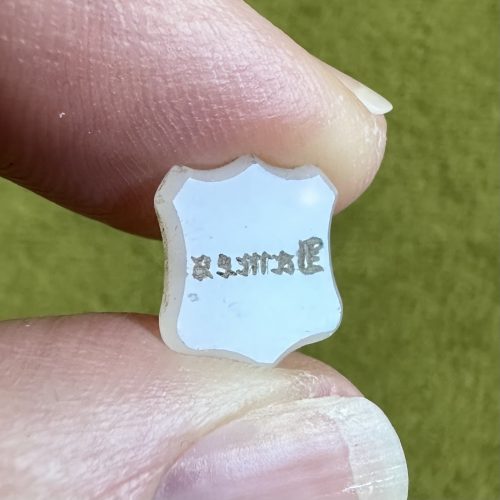
In the late Georgian/ early Victorian times, chalcedony intaglios began being imitated thanks to the advent of Tassies – also known as pastes – which offered a much more affordable alternative to the semi-precious stones. This aligned with the increase in letter sending, as it became easier than ever to have correspondences sent.
As such, people branched out from their family heraldics and got a bit more whimsical with their chalcedony intaglios. We start seeing lots of depictions of nature, both floral and fauna, which you can see in our current collection – even an adorable cartoony owl offering insights into the cheeky nature of chalcedony intaglios as time went on.
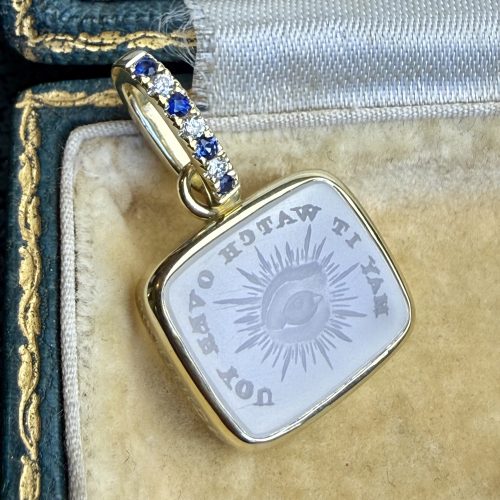
Some designs also became more spiritual, aligning with the properties of the semi-precious stone, which is said to have nurturing and calming properties. Here at Bauble Magpie we are huge believers in writing our own stories and discarding any of society’s rules that don’t serve us, so your chalcedony jewelry can have any meaning you want – it’s your life, your jewelry, and your desires that matter.
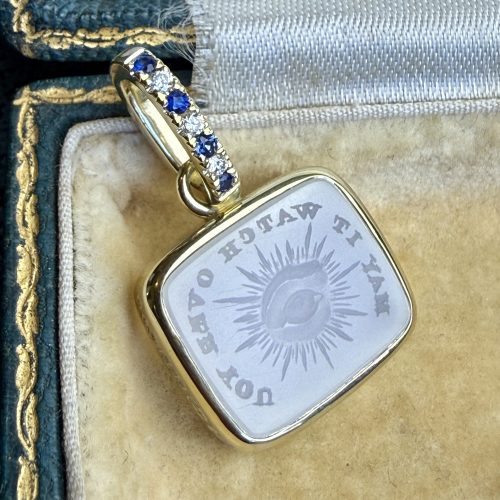
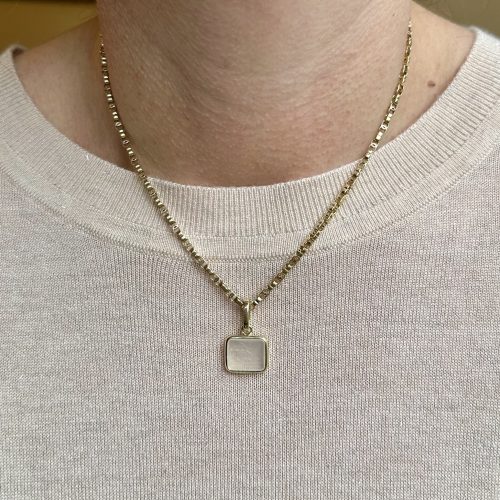
Turning these pieces into chalcedony jewelry is an absolute delight, and as always Emma is here to help you through the process to design exactly the right piece to become your own personal talisman. We love setting chalcedony intaglios into yellow gold or platinum, which will make for outstanding chalcedony rings or pendants.